
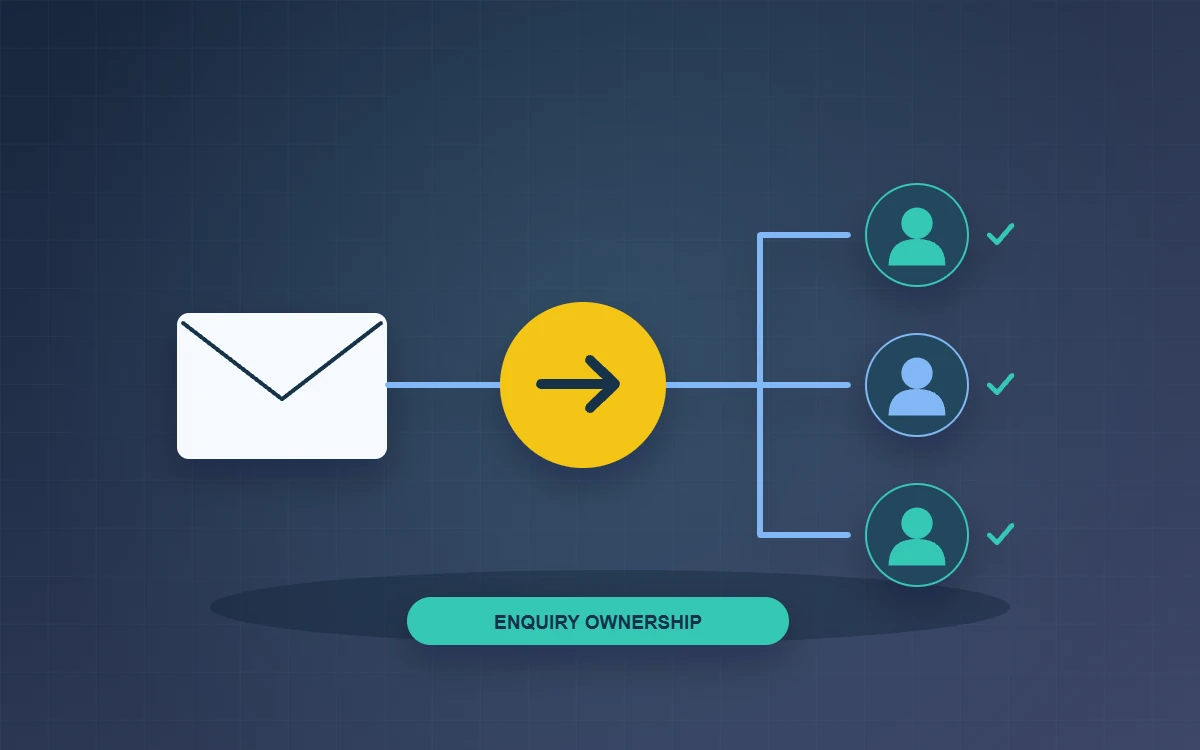
Effective customer enquiry assignment gives each enquiry one shared record, one owner and a reply deadline. Have the incoming owner confirm the handover so supervisors can spot unassigned work. A customer may submit a website form and later call for an update. If colleagues handle those contacts separately, the customer could receive conflicting replies or wait while each assumes the other is replying.
Use one reference to simplify customer enquiry assignment
Record the channel, time received, contact details, a brief description and the location of the original message. When a customer follows up, look up the contact and topic before creating a new record. If the details match, add the message to the existing enquiry. A small set of statuses can cover most cases: awaiting assignment, in progress, waiting for the customer and closed. Define the next action for each status so the team knows what to do when it changes.
Route enquiries by type and confirm ownership
Separate sales, service and billing enquiries and route each to the appropriate team on duty. Record one owner and a reply deadline per enquiry. When another team needs to contribute, the owner can request their input and continue updating the customer. During a handover, ask the incoming owner to confirm receipt. Record outstanding tasks and any promises already made to the customer.
Decide how to handle exceptions
Suppose a repair request arrives late on Friday. The assigned colleague is away from the office and has yet to acknowledge it. A supervisor could review an unacknowledged queue before the end of the day and reassign the request. If a fix takes longer, the incoming owner can confirm receipt and tell the customer when to expect an update. Keep the original deadline and reason for reassignment in the record so the team can evaluate its routing rules later.
Test the workflow with varied enquiries
Test a follow-up that arrives through another channel, a case assigned to someone who is away and a request that needs input from two teams. Check whether staff find the original record, who replies first, when the customer gets an update and how soon the supervisor can see an exception. During the trial, review a few overdue cases each week and identify whether the cause was missing information, routing or workload. Adjust the rule or process that contributed to the delay.
Check how the workload is distributed as well. Record each colleague’s open enquiries by category and which ones are due for a reply. Before someone goes on leave, name a backup and hand over the open list. If overdue work clusters in one category, check whether the team needs more coverage before changing how cases are routed.
Frequently asked questions
Is a shared mailbox enough?
It can be a useful starting point with a shared queue, provided the team can see who owns each enquiry, when a reply is due and what has happened so far.
Should we automate assignment immediately?
Start with frequent, predictable enquiry types once the team agrees on the categories and knows how to handle exceptions.
When can an enquiry be closed?
Record the response and any follow-up arrangements, then confirm there are no outstanding tasks for the enquiry.