
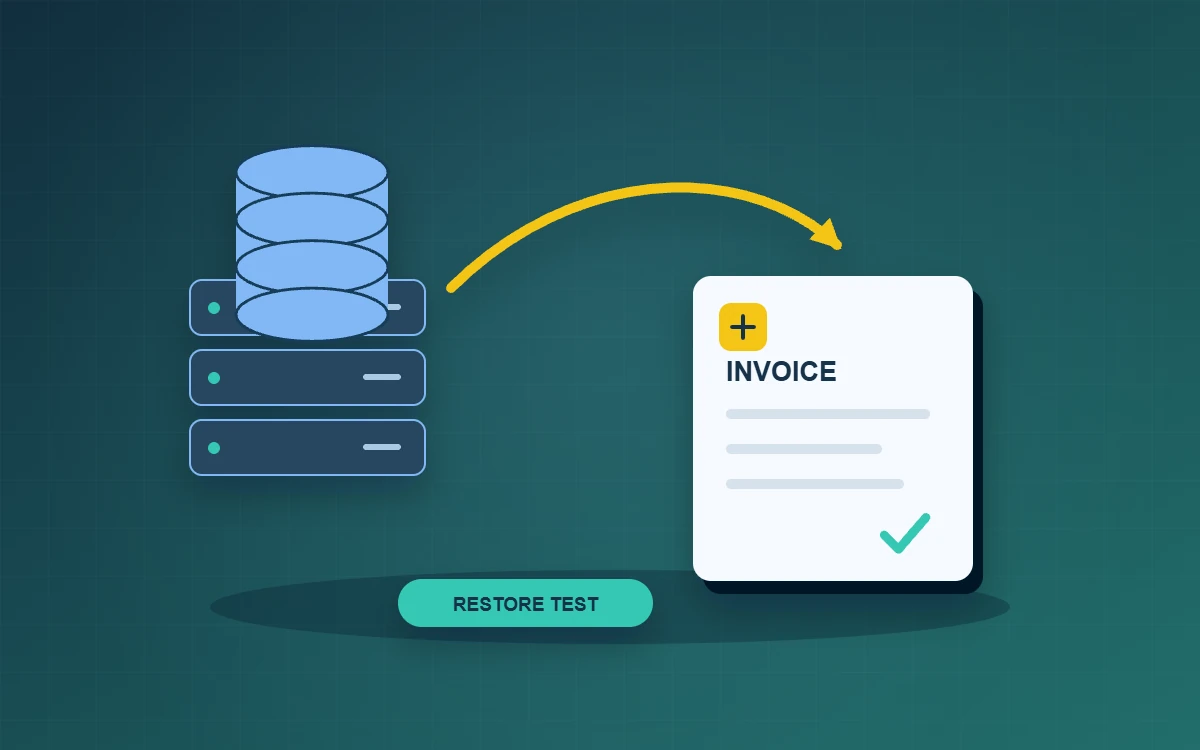
A backup restore drill should recover a complete business record in an isolated environment, verify its data, files and permissions, and measure recovery time and the age of recovered information. One invoice is a practical first test. For a first drill, choose one settled invoice and ask finance what it would take to verify it. The answer may include an invoice number, customer, amount, tax, related order and the PDF originally issued. Have a technician identify where each item lives. A database restore may recover the figures while leaving the supporting document in a separate storage service.
What must a backup restore drill recover?
Agree how long the business can operate without the service and how much recent work staff can reasonably re-enter. A hypothetical team might tolerate a four-hour interruption but only one hour of lost orders. These are different targets. Ask department heads to choose figures that reflect peak trading periods, staffing and the effort of reconstructing a transaction.
Prepare an isolated recovery environment
Choose a location separate from production. Limit access and the amount of customer data copied. Before restoring, disable outbound invoices, payment connections and order notifications in the test environment. Confirm that authorised staff can obtain the backup, required decryption material and compatible software. An exercise should not interrupt the live service or contact a customer.
- Record when the drill starts, when the backup becomes available, when the system opens and when finance accepts it.
- Choose database and document backups from a consistent recovery point and check what each contains.
- Use an ordinary account for the invoice test and a separately authorised account for administrative checks.
Have the person who uses the record reconcile it
Ask finance to find the invoice from the customer record, compare the payment status with the agreed reference and open the attachment. Check that access restrictions still apply. If the amount matches but the attached PDF belongs to an earlier revision, record the failure and investigate the timing of the two backups before signing off.
Use the result to design the next drill
Compare the newest recovered record and elapsed time with the agreed targets. If most of the delay came from waiting for a provider to authorise access, improve the contact and approval process. Clear test copies according to the company’s retention rules, then have another colleague repeat the exercise using the revised instructions.
When several providers are involved, time each handover. Separate the time spent waiting for approval from the time taken to retrieve, transfer and restore the copy. A single total can hide a long approval queue. The next drill should show whether the particular delay identified by the first exercise has actually improved.
Should we overwrite the live database to test recovery?
Use an isolated environment and verify that its connections cannot write to the live service.
Is testing only the newest backup sufficient?
Start there, then test an older recovery point to check that retention matches the business need.
What should management receive?
Report a verified transaction, elapsed time, unresolved checks and the person responsible for each improvement.