
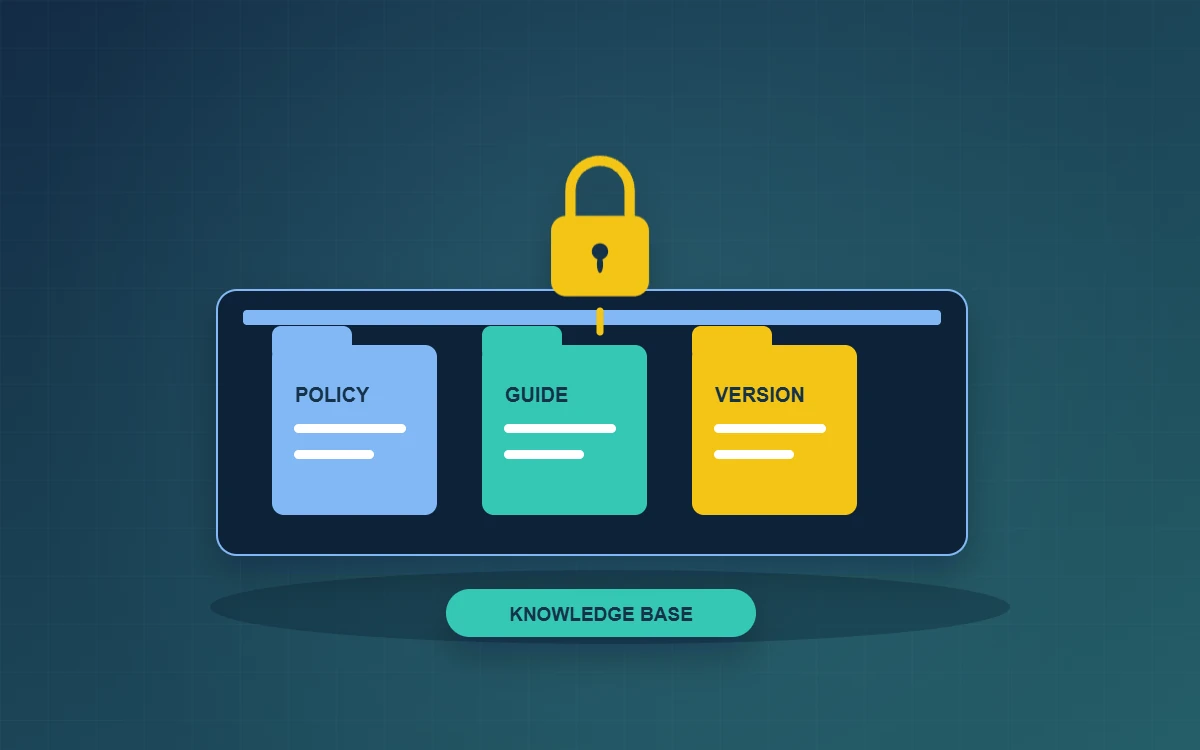
Govern an AI knowledge base by assigning a document owner, recording each approved version and restricting retrieval to sources the reader can access. When a document changes or is retired, verify both search results and citations with real test accounts. Shared folders, email attachments and departmental templates can all contain copies of the same policy. Establish which copy applies before the system uses it to answer questions.
Record who owns each source and when it applies
Begin with a single department or policy. For each document, record the owner, intended audience, approval status, effective date and next review date. Define where the approved version lives and who can replace it. Preserve outdated material for authorised historical review where needed, and retire it from ordinary search. If two versions cover different transition dates, ask the owner to define how users should interpret them.
Apply access rules before retrieving content
Suppose operations staff can read general reimbursement guidance, while only finance can see exceptions for particular accounts. Retrieval should use the reader’s identity and limit the source material before passing content to the model. Run the same question using two test accounts with different permissions. Compare both the response and cited material, and repeat the test after an account changes teams.
Test updates and retirement from end to end
- Create a fictional policy with an effective date and a revised version with one easy-to-spot change.
- Ask a normal employee’s question and check the answer against the quoted passage and effective date.
- Retire the old version and verify the updated index no longer cites it in general queries.
- When the current source is absent, confirm the system reports the gap and routes the question to a named owner.
Build upkeep into existing approval processes
Have the same people who approve the underlying documents approve what enters the knowledge base. Sample answers after a significant update and keep a record of stale citations, incorrect access and conflicting material. Give staff a way to flag a citation without copying sensitive source text into a support ticket. NIST places governance within AI risk management, and OWASP highlights sensitive information disclosure and compromised source material as risks for language-model applications.
After a document change, have its owner check an ordinary question and one that depends on an exception. If both the new and retired versions appear, compare the source inventory against the index before broadening access. Route questions about that policy to the owner until the team knows which version retrieval will return.
Frequently asked questions
Should we connect every shared folder?
Start with frequently used, approved material that has a clear owner. Add other areas after you can verify access and maintain version information.
Is deleting a file from the original folder enough?
Check that the search index and relevant caches no longer return the content. Verify with an ordinary test account after the change.
Which version should an answer cite?
Cite the version that applies to the question and that the reader can access. Route historical cases to someone authorised to interpret archived material when needed.